

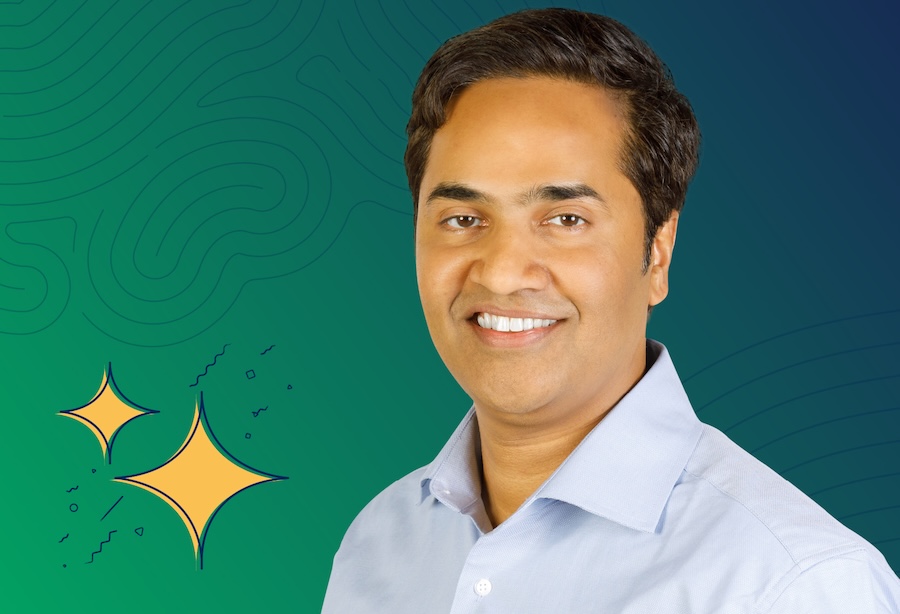
With three new AI-powered capabilities slated to begin rolling out in Q2, we wanted to make sure you heard about them straight from the person who’s been driving the work. We sat down with Dental Intelligence CTO Sudarshan Raghunathan to talk through what’s actually coming, how it was built, and what it means for the people who run dental practices every day.
Sudarshan, you’ve been at DI for a few years now. Where does this moment rank for you?
Honestly? This is the most excited I’ve been since I joined, and it’s not just because of the AI conversation, though that’s obviously a big part of it. We’ve arrived at a place where our technology and architecture can support real, rapid innovation.
We’ve been doing a lot of foundational work over the last year – unifying our data infrastructure, getting our security right, building frameworks that can carry serious weight. All of that is now paying off in a very visible way. Three big releases in one quarter is no small feat.
The dental tech space has been buzzing about AI for a while. What was DI’s read on all of that?
I won’t ever disparage a team that’s looking to innovate, but some of the ‘AI’ in the market has been a feature searching for a problem. We wanted to build something secure, trustworthy, and reliable.
Our approach was to really understand two things in parallel: what are the actual pain points our customers face every day, and do we have the technical foundation to solve them properly? Both questions had to have good answers before we built anything. Now that we have those answers, we’re launching three features that prioritize being truly useful.
Can you tell us anything about what’s coming?
I can give you the shape of it. We’re not announcing names today because each feature will get its own proper introduction as it rolls out. But they all are built to smooth out the places where dental practices feel the most friction.
One of them is about making it possible to actually have a conversation with your practice’s data instead of digging through reports and hoping you find the right thing.
One is about your schedule and using AI to identify the most efficient ways to fill open time, with full visibility into the reasoning, without bogging your staff down in mundane work.
And the final one for now is about making sure your patients can always get what they need from the front desk, any time of day, even when you’re closed.
That last one referring to “any time of day” sounds like automation. How do you approach what should or shouldn’t be automated?
I think that’s the right question to ask. The technology is capable of doing more and more autonomously. That’s real, and it’s only going to accelerate, but capability and wisdom aren’t the same thing.
What we’re launching in Q2 is built around a human model. The system surfaces recommendations, shows you the reasoning, and makes it easy for your team to act on what it finds. The degree of automation is something each practice gets to decide for themselves. We’re not going to push anyone past their comfort level. Instead, we want to show the value clearly enough that enough practices feel confident making automation calls on their own terms.
And the system can learn. The more data it sees, the smarter it gets. So the practices that start using these features now are going to have a real advantage as the capabilities mature.
DI has always said that dental practices run on relationships. Does AI change that?
No. And I’d actually argue that done right, AI reinforces it.
If you think about what takes up the mental energy of everyone involved in running a practice, a huge portion of it is operational. Monitoring the schedule. Chasing down data. Responding to patients after hours. Figuring out what the numbers mean and what to do about them. That’s not the work that makes someone recommend your dental practice to a friend.
Patients probably don’t care about how cleverly you can leverage your data, but they absolutely care about the quality of care you provide, and how it feels to be your patient. Those outcomes are governed by skilled hands and strong relationships. That’s what makes a dental practice great.
We’re simply trying to lighten the operational load so the people in your practice have the mental bandwidth to do the work that actually requires a human. That’s always been DI’s job, and this is just the most powerful version of it we’ve built so far.
“What I want for every practice using these tools is simple: trust that the system is working for you in the background, so you can bring your full attention to your patients and your people. Take the mundane off the plate and use that energy to be human. That’s what all this is for.”
-Sudarshan Raghunathan, CTO, Dental Intelligence
Individual feature announcements will be rolling out beginning in Q2. We’ll cover each one in detail as they launch, so if this conversation left you with questions, there’s more on the way. Sign up here to get on the early access list and get updates straight to your inbox as these features become available.


.avif)